Light
Daylight and bright bulbs fade ink and photographs and yellow paper. Keep papers in closed boxes, and display copies rather than originals. A framed original on a sunny wall will fade within a few years.
Acid-free boxes, sleeves and albums for family papers and photographs
Drawer G · the storage guide
A practical guide for one evening's work: sort, take out what harms, wrap, box and label — then find the right place in the house.
No special room is needed. A clean table, a pencil, a soft brush and enough time to read as you go are the whole kit. The point is not perfection; it is getting papers out of the conditions that slowly harm them and into an order a relative could follow.
Metal fastenings rust in a damp house, and rust from clips leaves orange stains and holes that spread into the paper. Slide paper clips off sideways rather than pulling them up, supporting the sheet with a flat finger. Staples can be eased out from the back with a blunt knife, opening the legs first.
Rubber bands are worse. As they age they go sticky, then hard, and leave a brown, tacky line where they lay. If a band has perished onto the paper, do not scrape it; leave the residue and wrap the item on its own in tissue.
Where pages genuinely belong together, put them in one document wallet instead of fastening them. A folded slip of tissue between groups inside the wallet does the job of a clip with none of the harm.
Daylight and bright bulbs fade ink and photographs and yellow paper. Keep papers in closed boxes, and display copies rather than originals. A framed original on a sunny wall will fade within a few years.
Mould grows on paper in damp air, and damp makes ink run and pages stick. Avoid cellars, garages, outside walls and the space under a sink. If a room feels damp to you, it is too damp for papers.
Heat speeds every chemical change in paper; swings of heat and cold are worse still. Lofts are hot in summer and cold in winter. A cupboard against an inside wall in a lived-in room is usually best.
The steadiest place in most British homes is a wardrobe or a shelf in a bedroom with no outside wall, away from radiators. Keep boxes off the floor by a few centimetres, in case of a leak, and not directly against a wall, so air moves around them.
| Material | How to keep it | From our list |
|---|---|---|
| Letters, certificates, school reports | Unfolded where safe, in wallets, inside an A4 box | Lidded box, A4 · wallets |
| Deeds, ledgers, longer sheets | Flat, in a foolscap box; folded ones left folded | Lidded box, foolscap |
| Newspaper cuttings | Separated from everything else by buffered tissue | Buffered tissue |
| Prints and postcards | One to a sleeve, sleeves upright or flat in a box | 6×4 or 10×8 sleeves |
| Prints the family looks at | In a slip-in album, captions in pencil | Slip-in album |
| Single large negatives | One to a sleeve, kept away from prints | 10×8 sleeves |
Make a simple list of what each box holds and keep a copy outside the box — in a notebook, or a photograph of the list on your phone. A box is only useful to the next generation if they can tell what is in it.
For a first evening's work on one family's papers we put together a kit: one A4 lidded box, a pack of ten document wallets, fifty 6×4 inch polyester sleeves, twenty-five sheets of buffered tissue, a soft labelling pencil and a printed sorting sheet that follows the four steps on this page. It holds roughly a shoebox of loose papers and photographs.
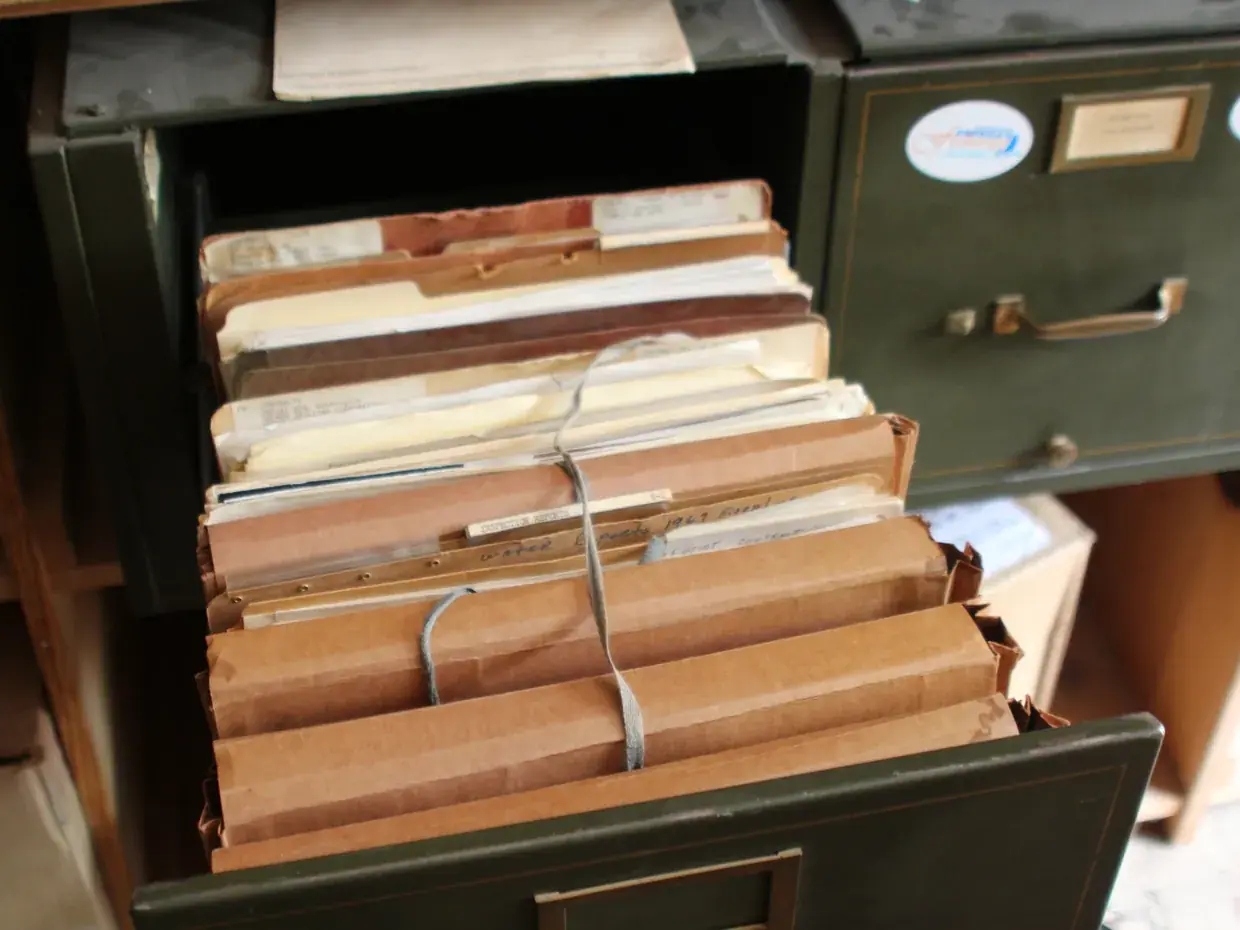
One A4 lidded box, ten document wallets, fifty 6×4 in sleeves, 25 sheets of tissue, a soft labelling pencil and a printed sorting sheet.
£49inc. VAT where due