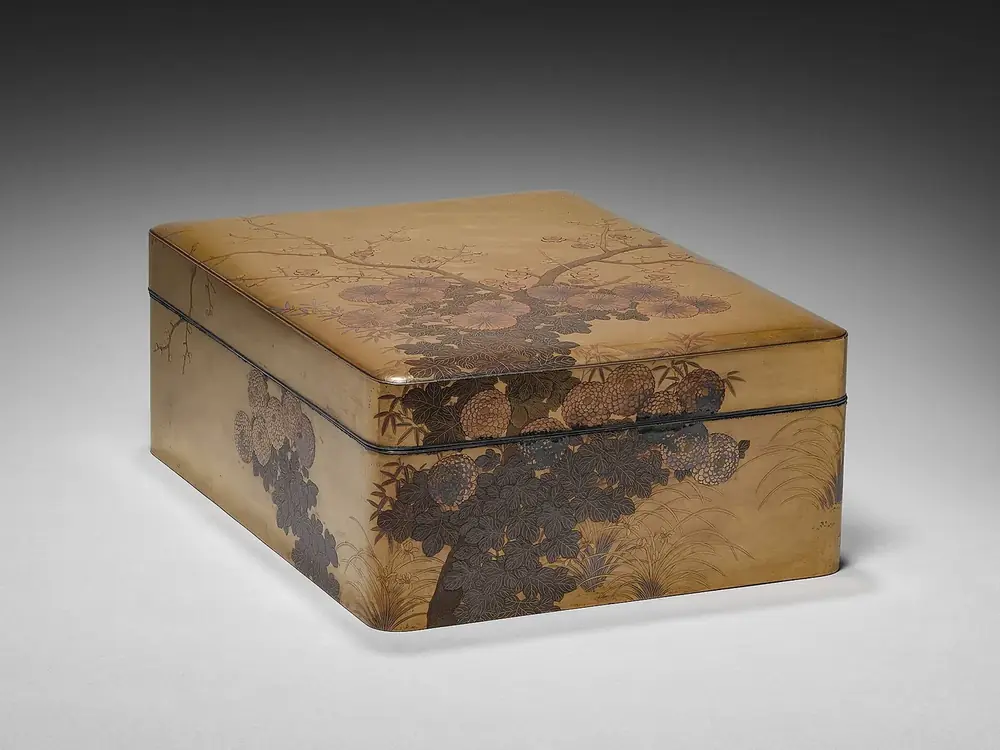
Accession VN-B01
Lidded box, A4
Internal 315 × 225 × 80 mm. Acid-free, lignin-free grey board, two-piece lid with a full drop.
£14inc. VAT where due
Acid-free boxes, sleeves and albums for family papers and photographs
Drawer B · boxes, wallets and tissue
Lidded boxes, document wallets and tissue: the three layers between a family's papers and the attic, the damp and the light.
A good storage box does three jobs. It keeps light off, it slows the swing of humidity, and it does not add any harm of its own. Most household boxes fail the third test. Brown corrugated card and shoeboxes are made from wood pulp that still contains lignin, and over the years the lignin breaks down into acids that move into whatever lies against it — you can see it as a brown line on the edge of a letter that has sat against a box wall.
Acid-free describes the board when it leaves the mill: it tests at pH 7 or above, so it is neutral or slightly alkaline rather than acidic. On its own that is not the whole story, because board that still carries lignin can become acidic as it ages. That is why we also insist on lignin-free: the lignin has been removed from the pulp, so there is nothing left inside the board to sour later.
Our boxes and wallets are also buffered. During manufacture a small reserve of calcium carbonate is added to the board. It sits there doing nothing until acids arrive — from the papers themselves, from a newspaper cutting, from polluted air — and then neutralises them. Buffering is the right choice for nearly all paper: letters, certificates, deeds, ration books, programmes, school reports and the like.
A few materials prefer a neutral, unbuffered surround: colour photographs, blueprints, and some early photographic prints. The simplest way to handle them is to sleeve them in polyester first and then box the sleeves; the polyester is inert and keeps the print away from the board. The sleeves page explains this in more detail.
Both boxes are two-piece: a base and a separate lid with a full drop, so the lid comes most of the way down the sides. That gives a double wall all round and a dust seal at the top edge. The board is grey on the outside and white on the inside, with metal-free corners folded and locked rather than stapled. Boxes arrive flat and fold up in about a minute without glue or tape.
| Item | Internal size | Holds | Price |
|---|---|---|---|
| Lidded box, A4 | 315 × 225 × 80 mm | A4 letters and certificates, flat, with wallets | £14 |
| Lidded box, foolscap | 350 × 240 × 80 mm | Foolscap deeds, ledgers, older legal-size sheets | £16 |
| Document wallets, pack of 10 | A4, folded with tuck flap | One bundle each, inside either box | £11 |
| Buffered tissue, 25 sheets | 500 × 750 mm | Interleaving, wrapping folded papers | £9 |
The foolscap box exists because a great many twentieth-century papers are not A4. Foolscap sheets run to roughly 203 × 330 mm, and they will not lie flat in an A4 box without folding, which is exactly what we are trying to stop. If your papers are folded already, do not force them open if the fold is brittle; lay them in folded and let them be.
Internal 315 × 225 × 80 mm. Acid-free, lignin-free grey board, two-piece lid with a full drop.
£14inc. VAT where due
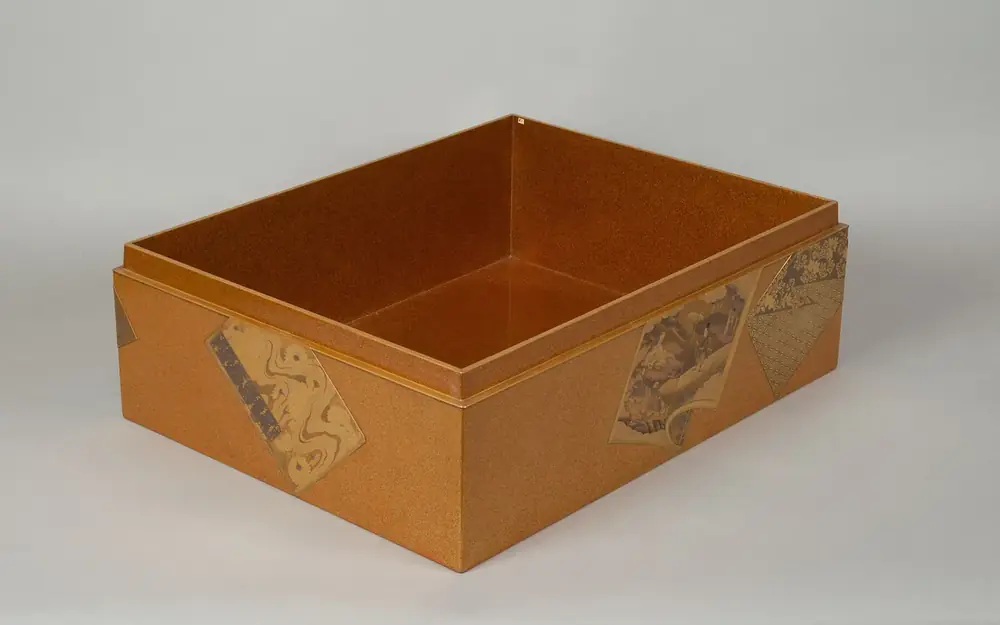
Internal 350 × 240 × 80 mm. Same board as the A4 box, cut long for foolscap deeds and ledgers.
£16inc. VAT where due
A box full of loose sheets is still a muddle. Document wallets bring order inside it: one wallet per person, per house, per decade or per subject, whatever makes sense to the family. Each is a single folded sheet of acid-free card with a tuck flap, so nothing slides out when the box is tipped.
Label in soft pencil, never in ballpoint or felt pen, which can bleed through damp and fade unevenly. Write on the wallet, not on the papers. On the box, a pencilled label on the end panel lets you read the contents when boxes are stacked on a shelf.
Stack boxes no more than four high, the heaviest at the bottom, and keep them flat rather than on end so the papers rest on their faces instead of their edges.
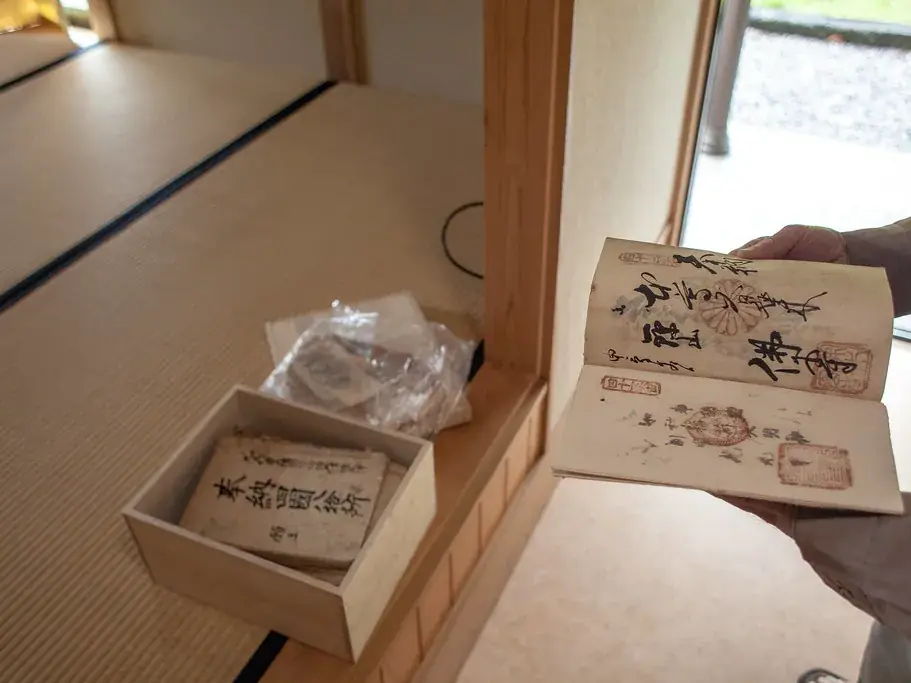
A4 folded wallets in acid-free card with a tuck flap, to keep one bundle of papers together.
£11inc. VAT where due
Tissue goes between items that should not touch: a newspaper cutting and the letter it was sent with, a folded certificate and its neighbour, a pressed flower and anything at all. Newsprint in particular is acidic and will brown the paper beside it, so a sheet of buffered tissue either side costs pennies and spares the letter a permanent mark.
Our sheets are 500 × 750 mm, large enough to cut down for most jobs. Cut with scissors rather than tearing, so no loose fibres catch on fragile edges. Tissue is also useful for padding the empty corners of a part-filled box so the papers do not slide when it is moved.
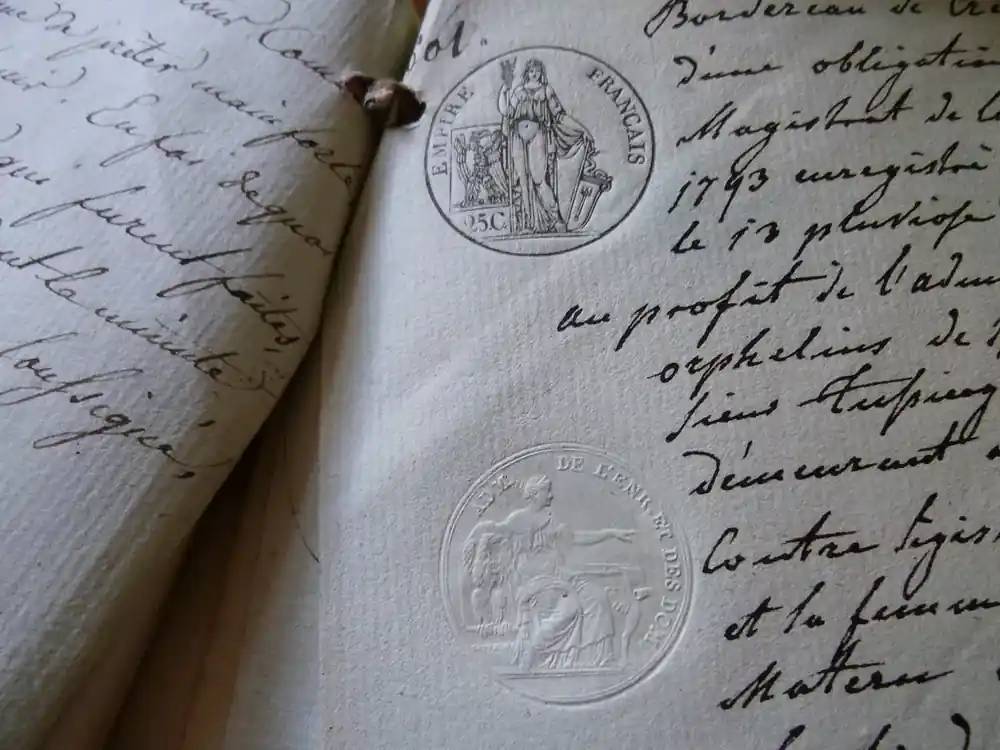
500 × 750 mm sheets, acid-free, buffered with calcium carbonate, for interleaving letters and papers.
£9inc. VAT where due